

So you want to start a Good Neighbor Week where you live.
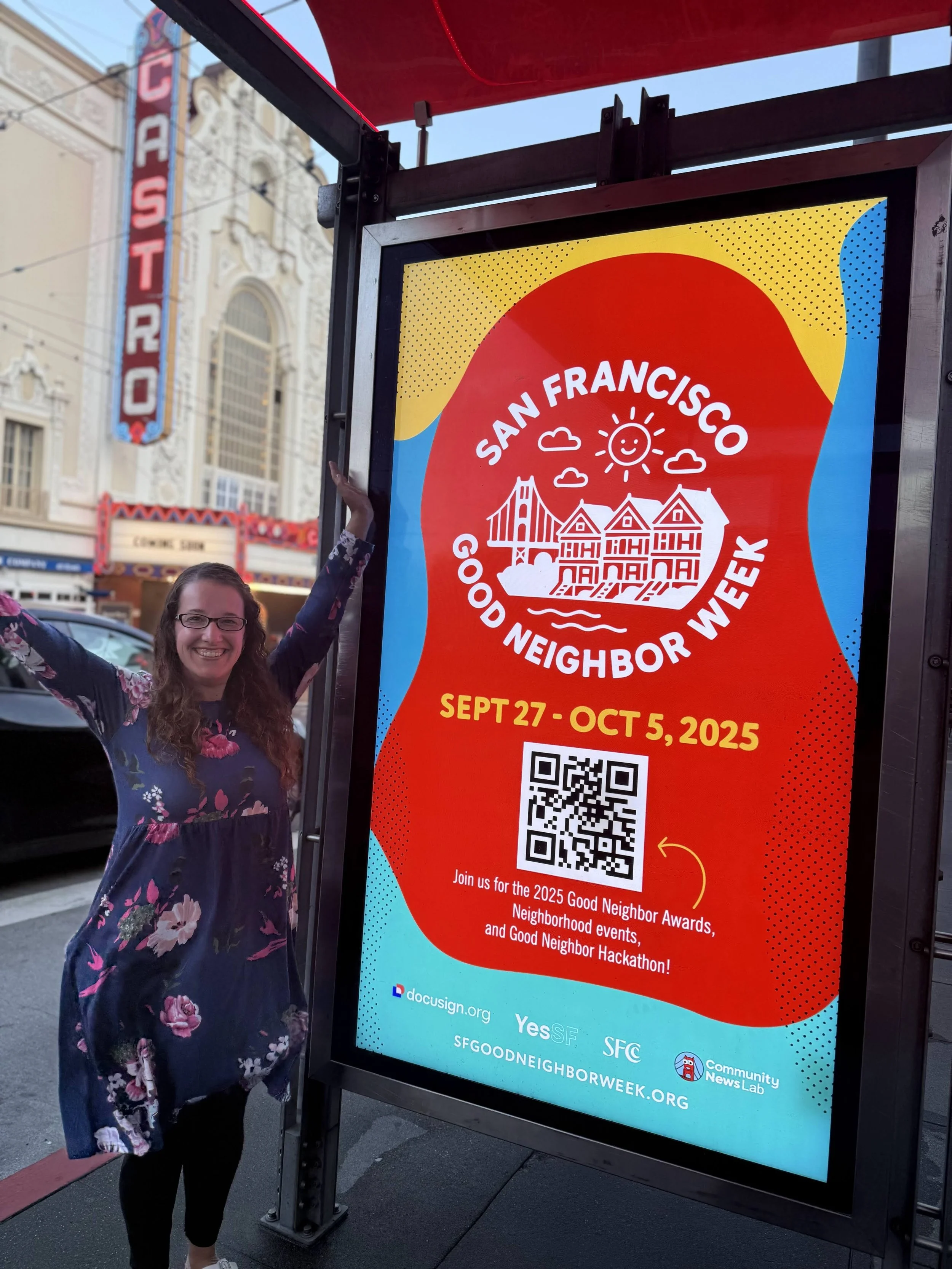
City-wide bus stop ads
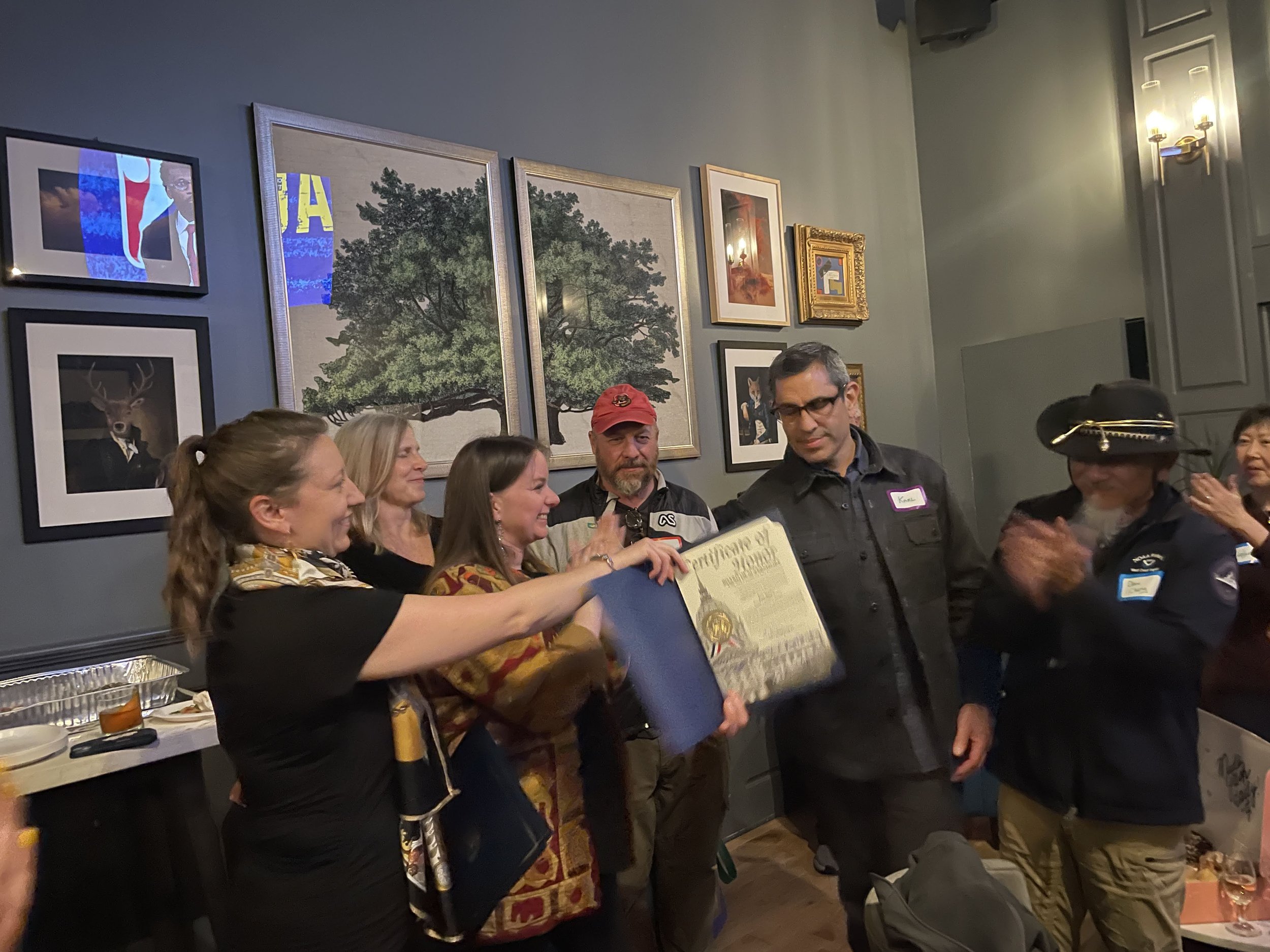
Neighborhood Good Neighbor Award celebrations
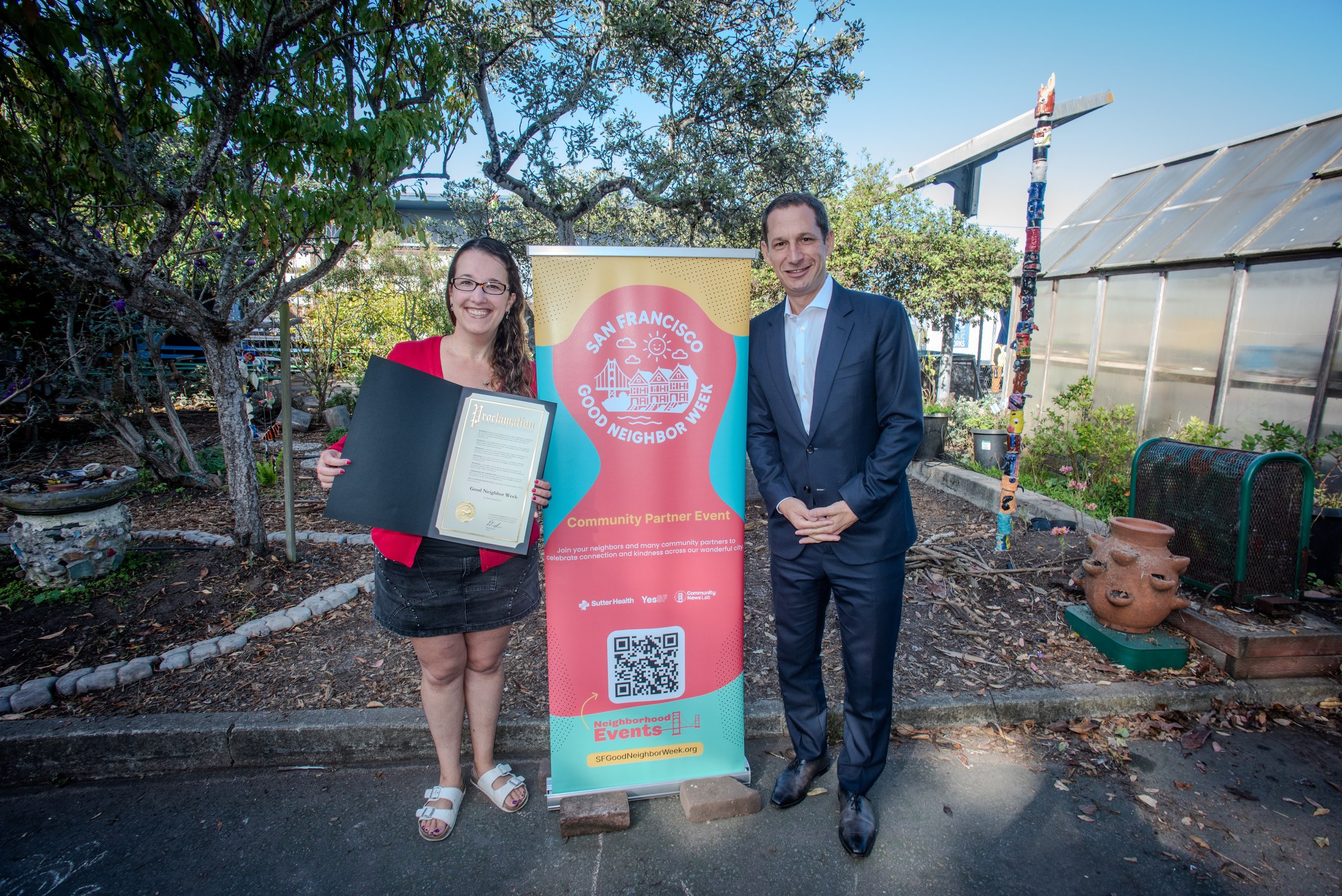
Mayoral Proclamation
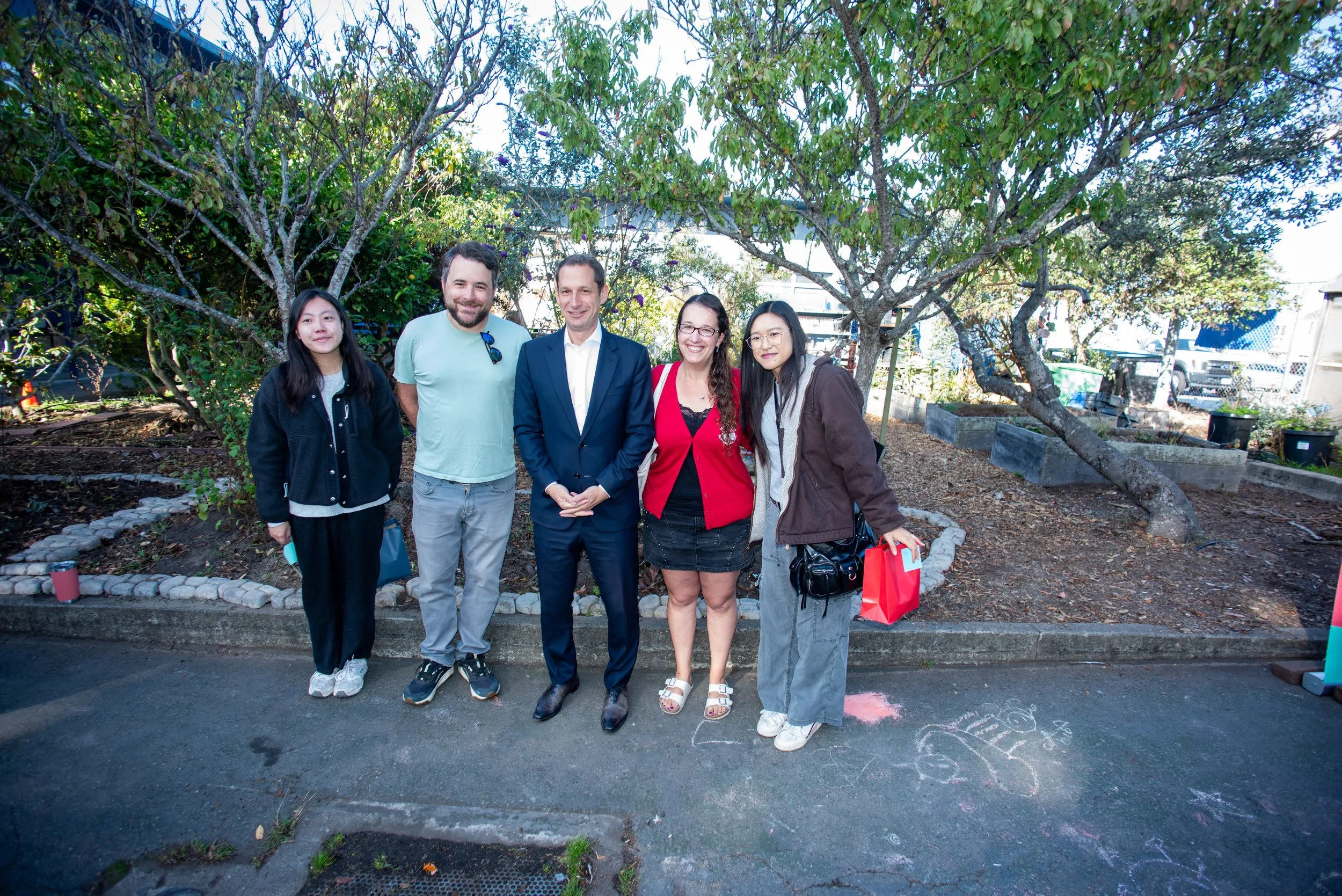
Mayor Daniel Lurie with SF Good Neighbor Week volunteers
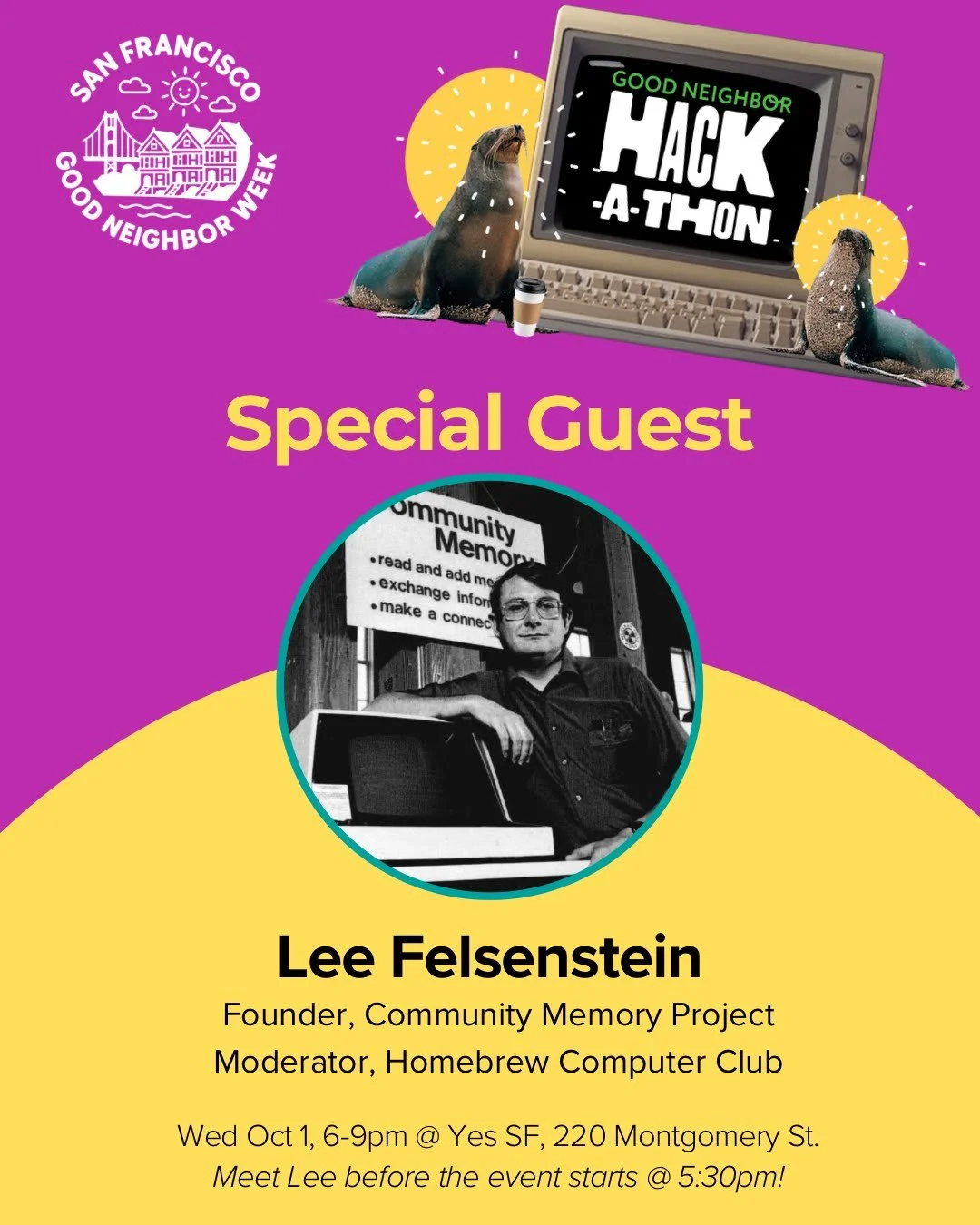
Lee Felsenstein at the Good Neighbor Hackathon
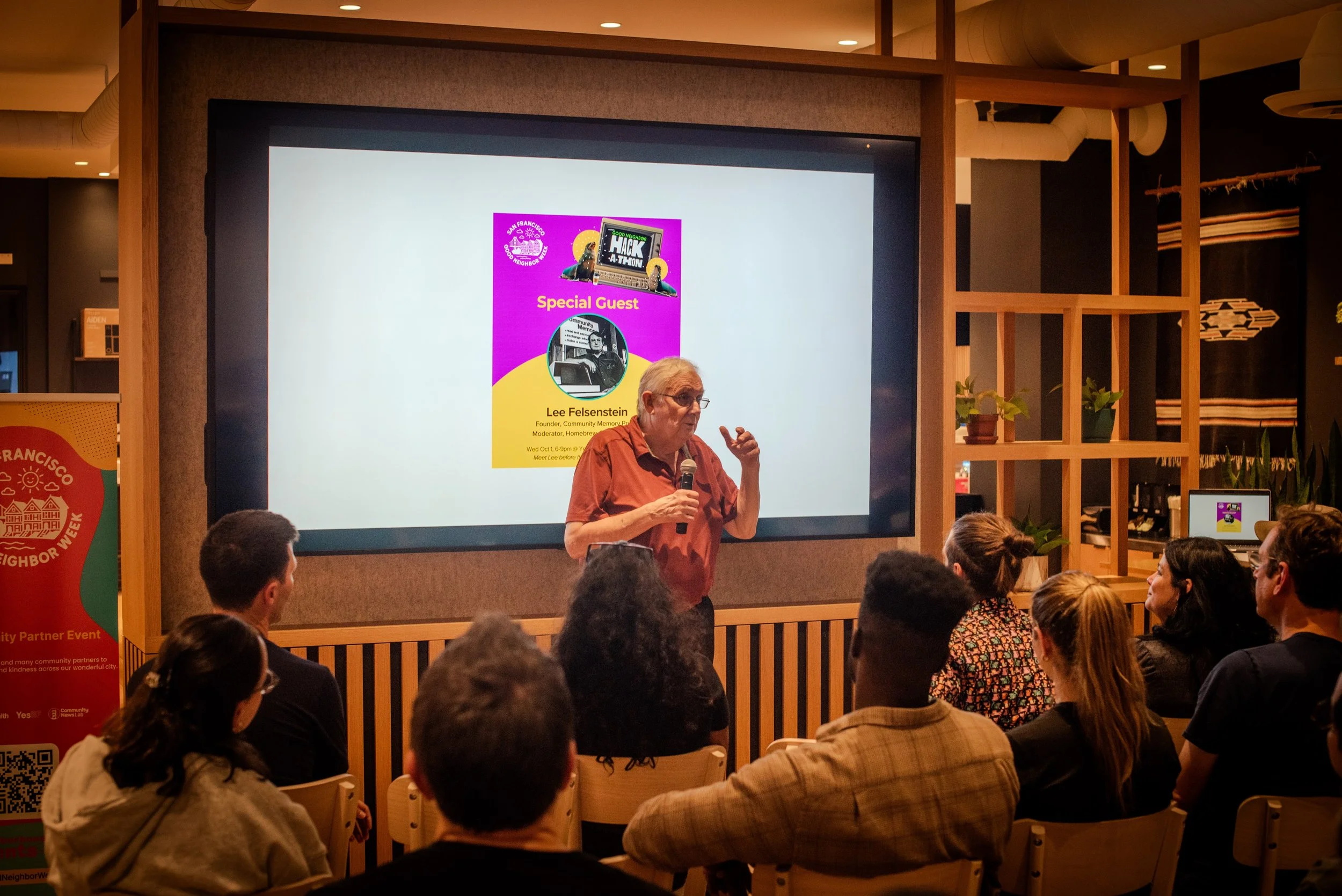
Lee Felsenstein at the Good Neighbor Hackathon
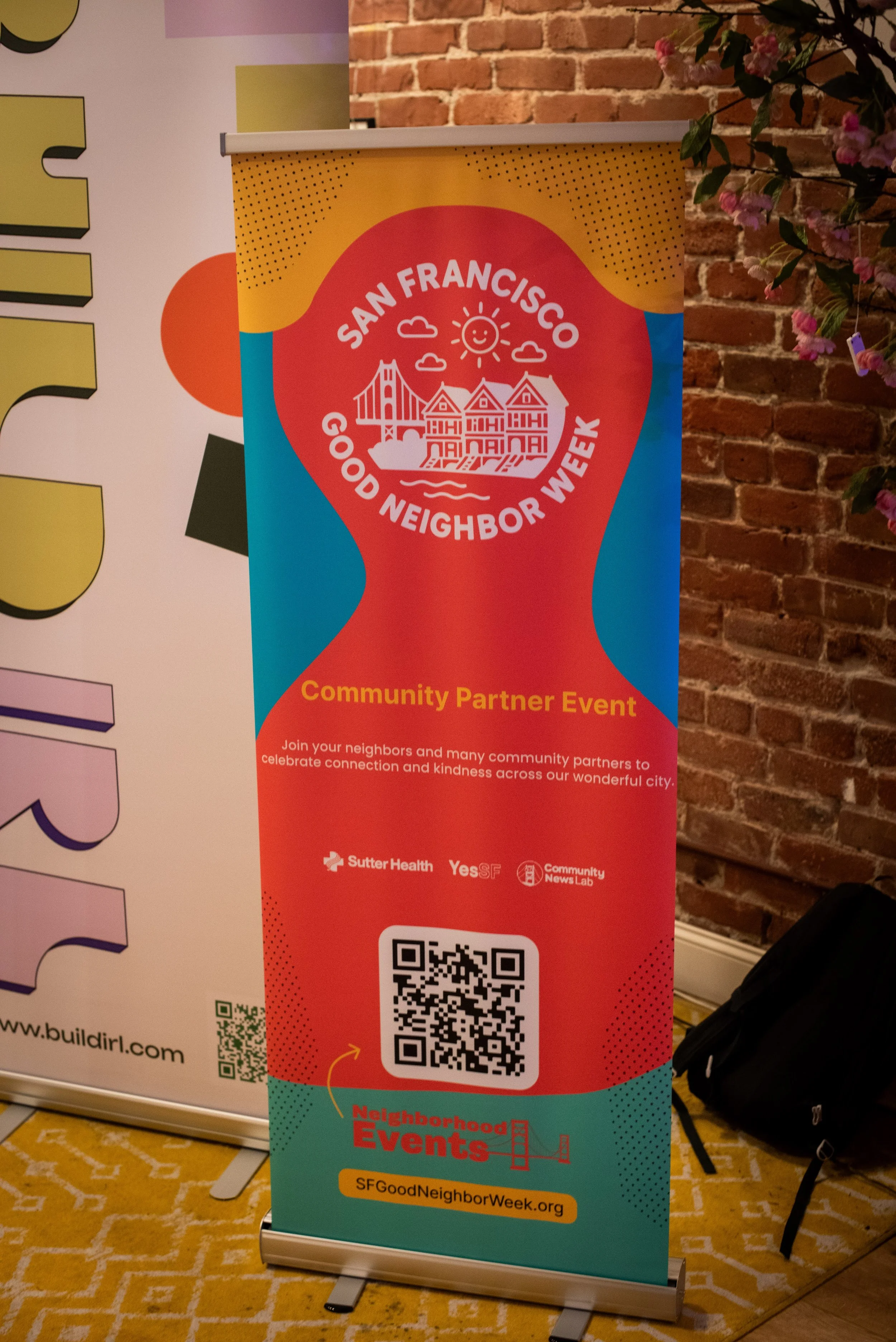
SF Good Neighbor Week event banners
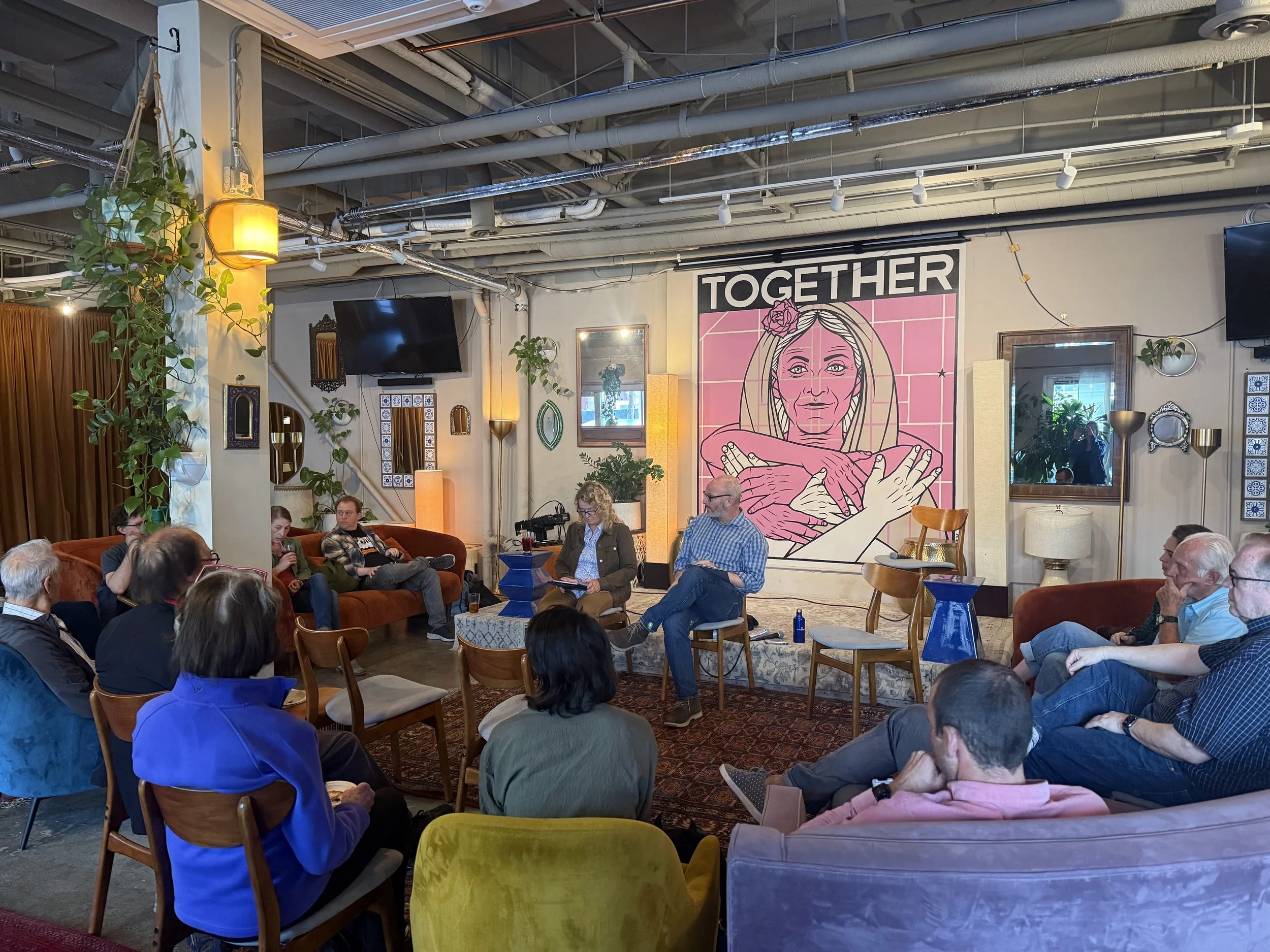
Local newsroom community listening session
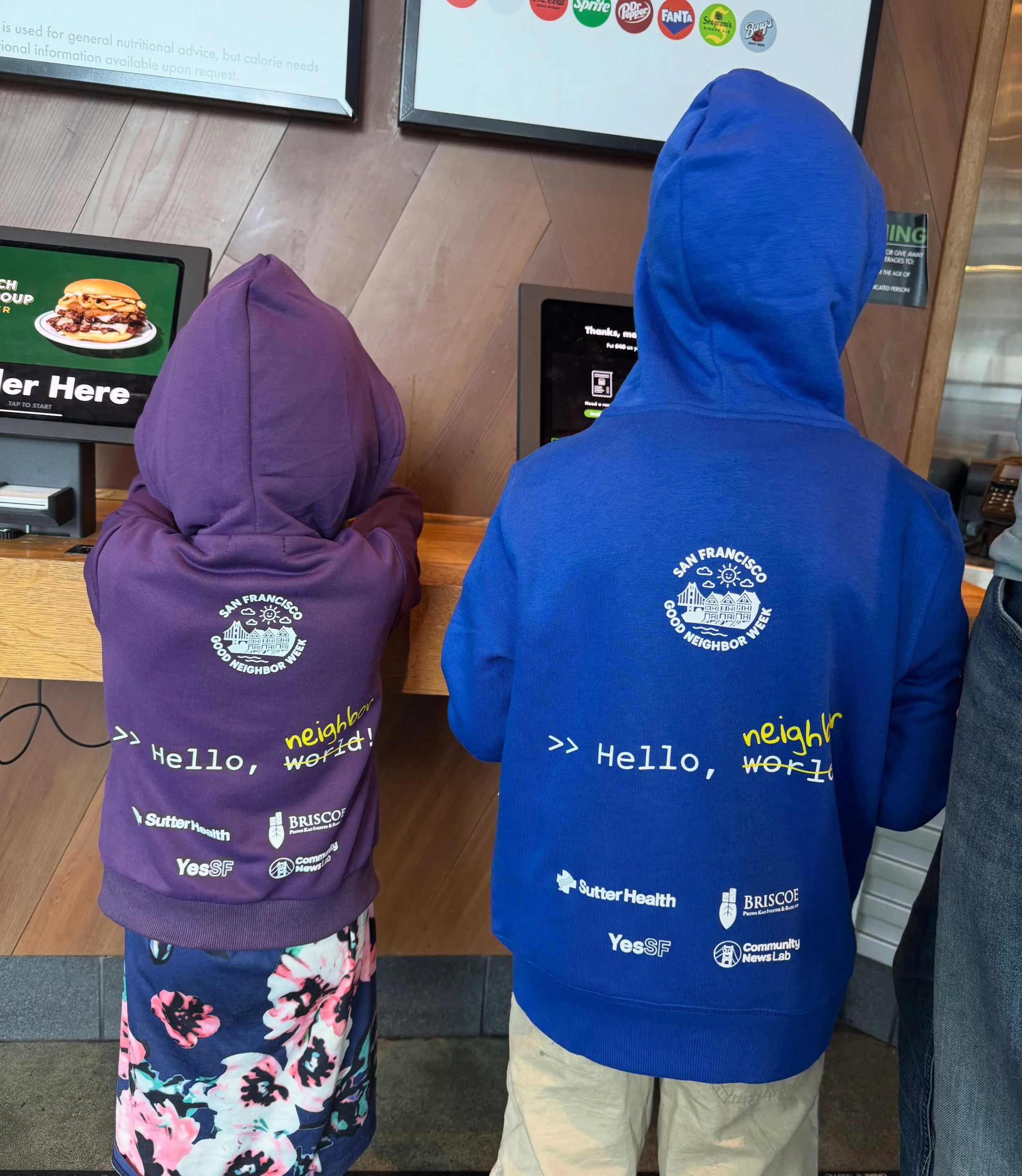
SF Good Neighbor Week apparel
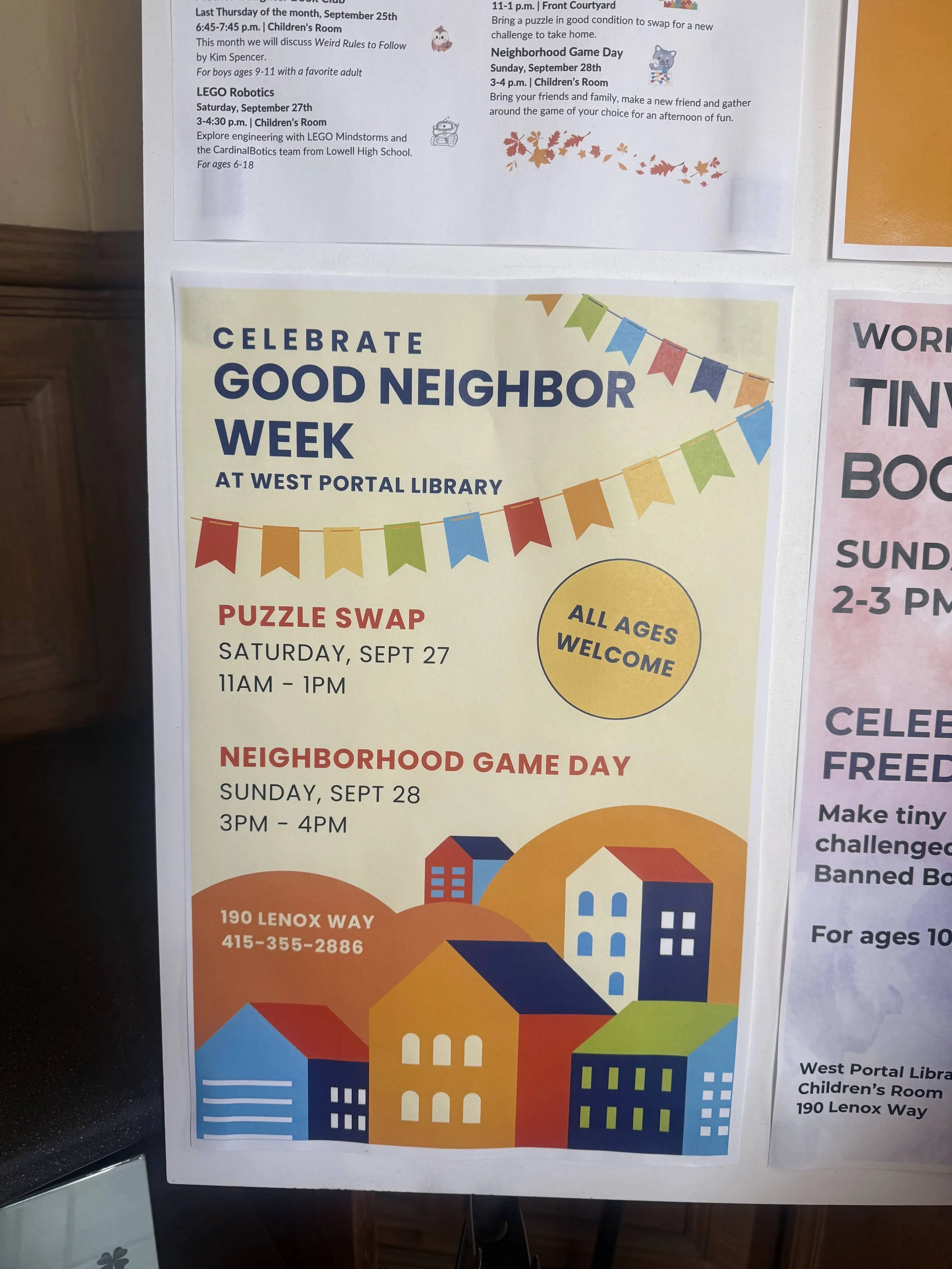
SF Good Neighbor Week flyers
On the radio!
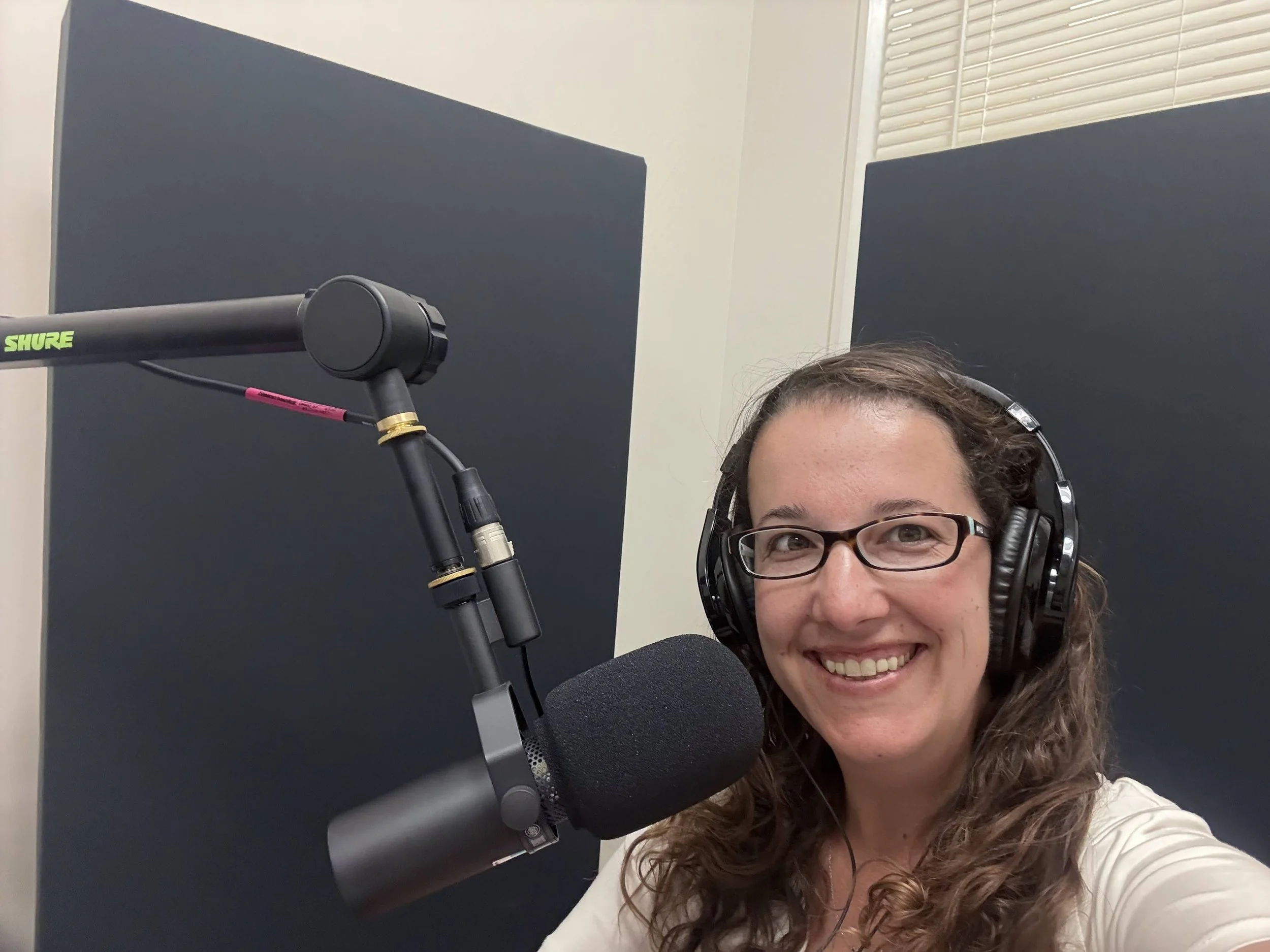
On public radio!
⚠️ This guide is a work in progress.
A quick overview of how SF Good Neighbor Week started:
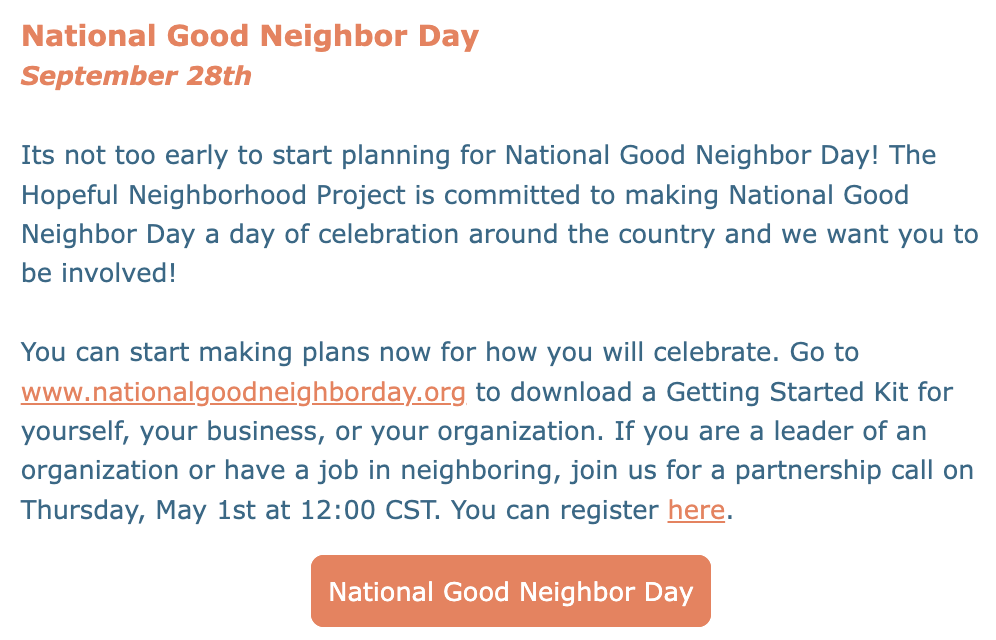
👈 The zoom call that started it all: Julia learned about National Good Neighbor Day through an email from the Hopeful Neighborhood Project, and she registered for their informational zoom on May 1, 2025. She expected the call to have hundreds of people across the country, and was surprised there were only a few people there. Julia learned about the holiday and that it had never been celebrated in San Francisco, and thought it might be fun to bring it to SF.
⭐️ The stars aligned ⭐️
National Good Neighbor Day is Sep 28, and the last week of September is officially the most beautiful week of the year in San Francisco. If there’s one week where people want to be outside meeting their neighbors, it’s then.
San Francisco elected a new mayor in 2025, who most people were pretty excited about, so there was a buzz in the city around new ideas for community building.
Focus on local: following a nationwide trend, San Francisco residents are increasingly turning to their local communities.
The opposite of doomscrolling: there’s something about talking to your neighbor in person that feels like the exact opposite of doomscrolling on our phones, and SF Good Neighbor Week taps into that.
Given the above factors, Julia has never gotten as positive a reception to anything she’s ever done, compared to asking San Francisco residents if they thought we should start an SF Good Neighbor Week.
Ten Steps to Starting a Good Neighbor Week like ours
Any individual resident or organization can start the holiday in your town. If you want it to be big, bring key partners on board early.
It was important for us to get buy-in and support from a broad array of partners in San Francisco before committing to the holiday. For us that included partners across City Hall, city-wide institutions and nonprofits (including popular ones like city-wide neighborhood cleanups, and the public library system), neighborhood groups (both formal neighborhood associations and informal gatherings), local newsrooms, and local tech-for-good organizations. Make it as easy as possible to say yes. Meet with every partner in person, if possible.
Decide what will be included in your launch year.
We looked at how other cities and states celebrate, and noticed that other cities do a variety of things, including official proclamations, calendar of events, and Good Neighbor Awards. We decided to do those three and add two more: block leader resources, and a Technology & Innovation track. That’s how we came up with the five tracks for SF Good Neighbor Week. We decided we wanted to launch with an ambitious framework for the holiday, while the scope of each of those tracks could start small and grow over time.
Make a website for the celebration.
Even if you are part of an existing organization with a great website, we recommend making a standalone website for the celebration. This makes it easier to bring partners on board. We get a lot of compliments on our website. Shoutout to Roxann Diffin from Warm Cookies of the Revolution, who helped us with our brand + illustration.
Define core values for the celebration.
When we asked the National Good Neighbor Day organizers if they had any specific guidance for San Francisco, they basically said, “Do whatever you want and we’ll support you. The one thing to keep in mind is relationships between neighbors.” We took that advice seriously, and when making decisions we always prioritize the option that builds relaitonships between actual neighbors (versus throwing a party downtown for people from across the city).
Consider what elements are shared city-wide versus what is organized at the neighborhood or block level.
Similarly to how the National Good Neighbor Day organizers were open to how we celebrate the holiday in San Francisco, while at the same time providing helpful guidance and resources, we wanted to balance shared infrastructure (like a city-wide nomination form for the Good Neighbor Awards) with empowering neighborhood and block leaders to celebrate however they see fit (like their own events and celebrations of their neighborhood’s Good Neighbor Award Winners).
If you’re in a city with many different neighborhoods, consider creating a Neighborhood Advisory Council to guide your work.
Especially if you’re an individual resident, small organization, or crunched on time, formalizing an advisory group might be hard to do in your first year. In our launch year we didn’t have time to formalize a Neighborhood Advisory Council, though we did rely on an informal group of neighborhood leaders who participated and who we were bouncing ideas off of in 2025. In 2026 we formalized a Neighborhood Advisory Council to guide our work, which is crucial to our continued success and growth.
If you launch with a calendar of events, balance existing events with signature events.
For our inaugural calendar of events, we made it easy for partners to put existing (mission-aligned) events on the calendar, while also investing more time in signature events that were specifically designed for SF Good Neighbor Week. In 2026, to align with our core values, all signature events wil have nametags and time for introductions.
If you launch with Good Neighbor Awards, consider apparel gifts.
Every Good Neighbor Award Winner received an SF Good Neighbor Week hoodie (a popular clothing item in San Francisco). Having signature apparel made the celebration more fun. We’re excited to offer more apparel options in 2026.
Consider the tradeoff between automation and relationships.
In our inaugural year we were extremely inefficient when it came to, well, every aspect of SF Good Neighbor Week. Every email we sent was an individual email from Julia’s personal account (see below). The advantage of this approach is that the launch of our SF Good Neighbor Week built many new relationships with and among amazing San Francisco residents. The disadvantage is the amount of time it took.
Check out this spreadsheet.
Here’s a spreadsheet of all the key activities that went into launching SF Good Neighbor Week, including what we did in 2025 and what we plan to do differently in 2026.
Sample communication
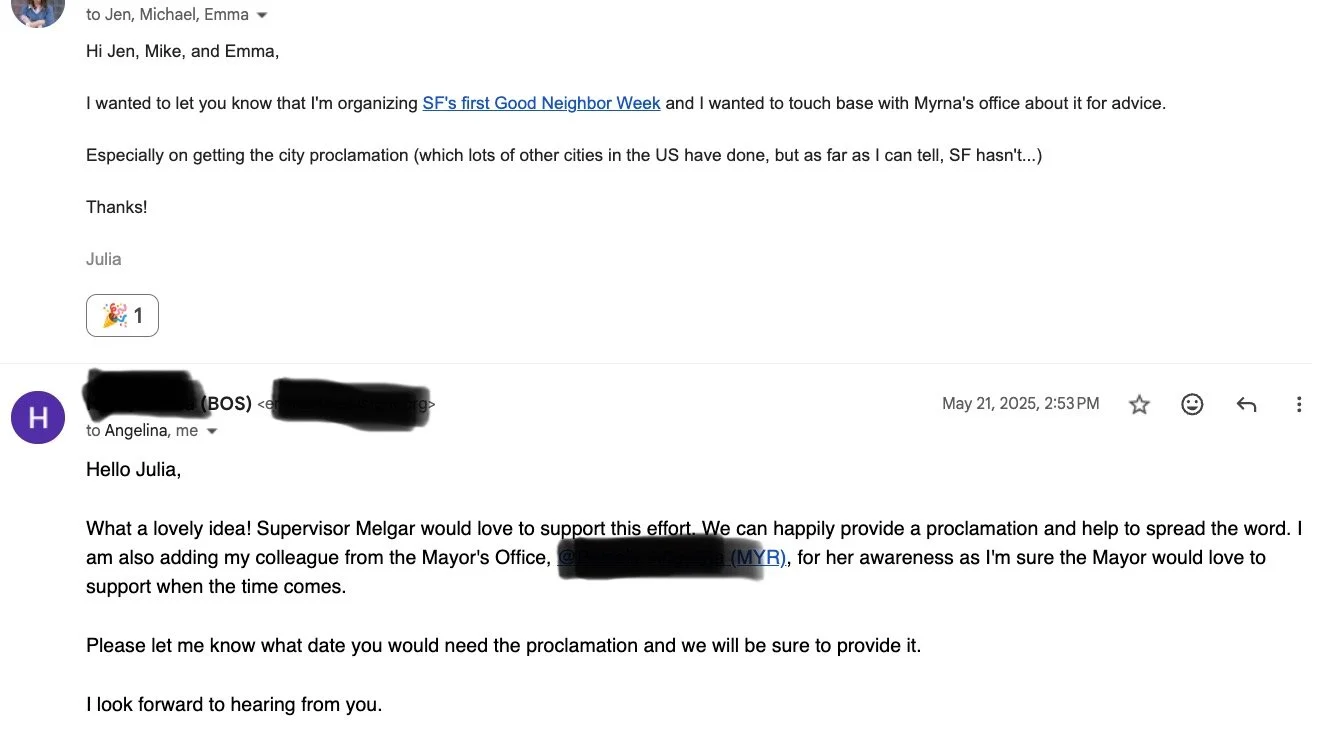
Email to City Hall legislative aides about City Proclamation
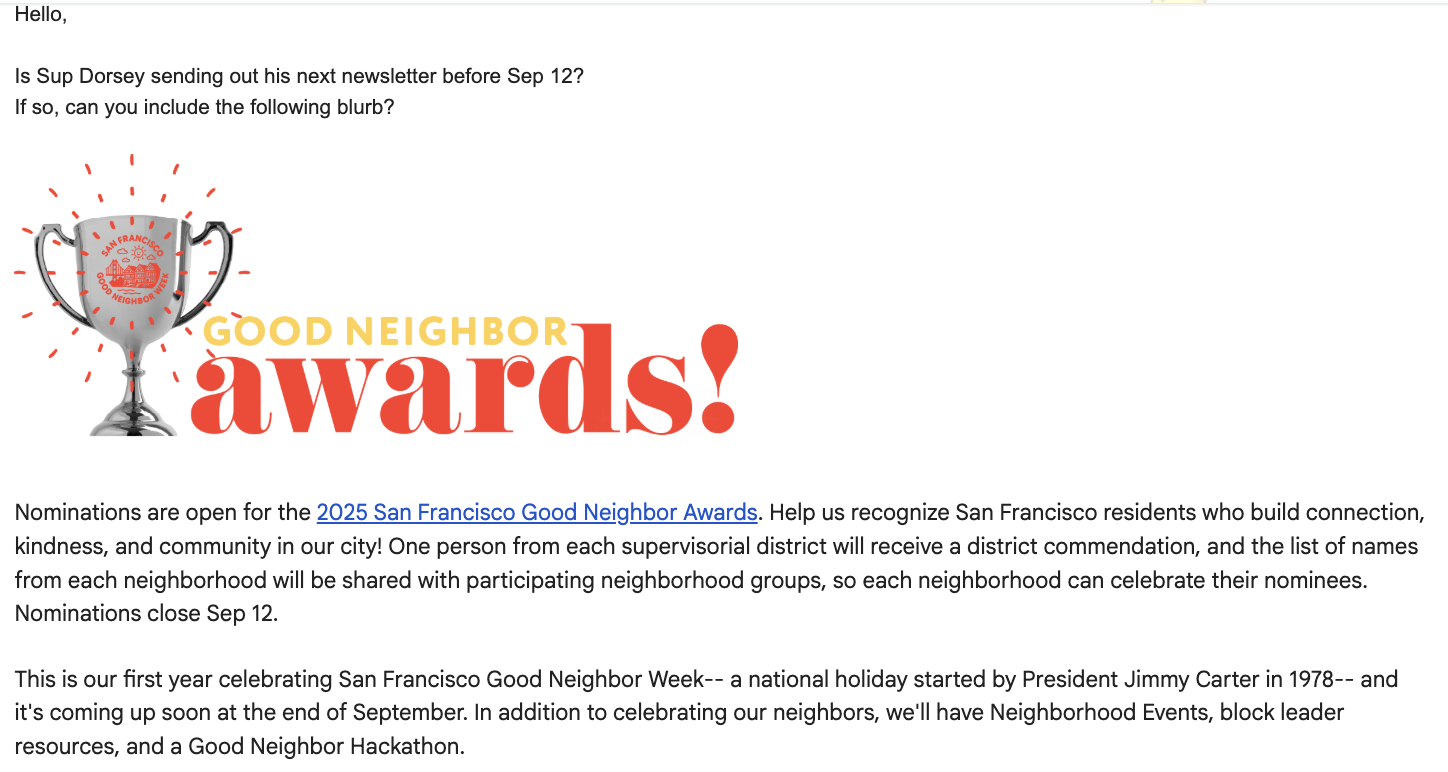
Email to Board of Supervisor's office (City Council) about promoting nomination form
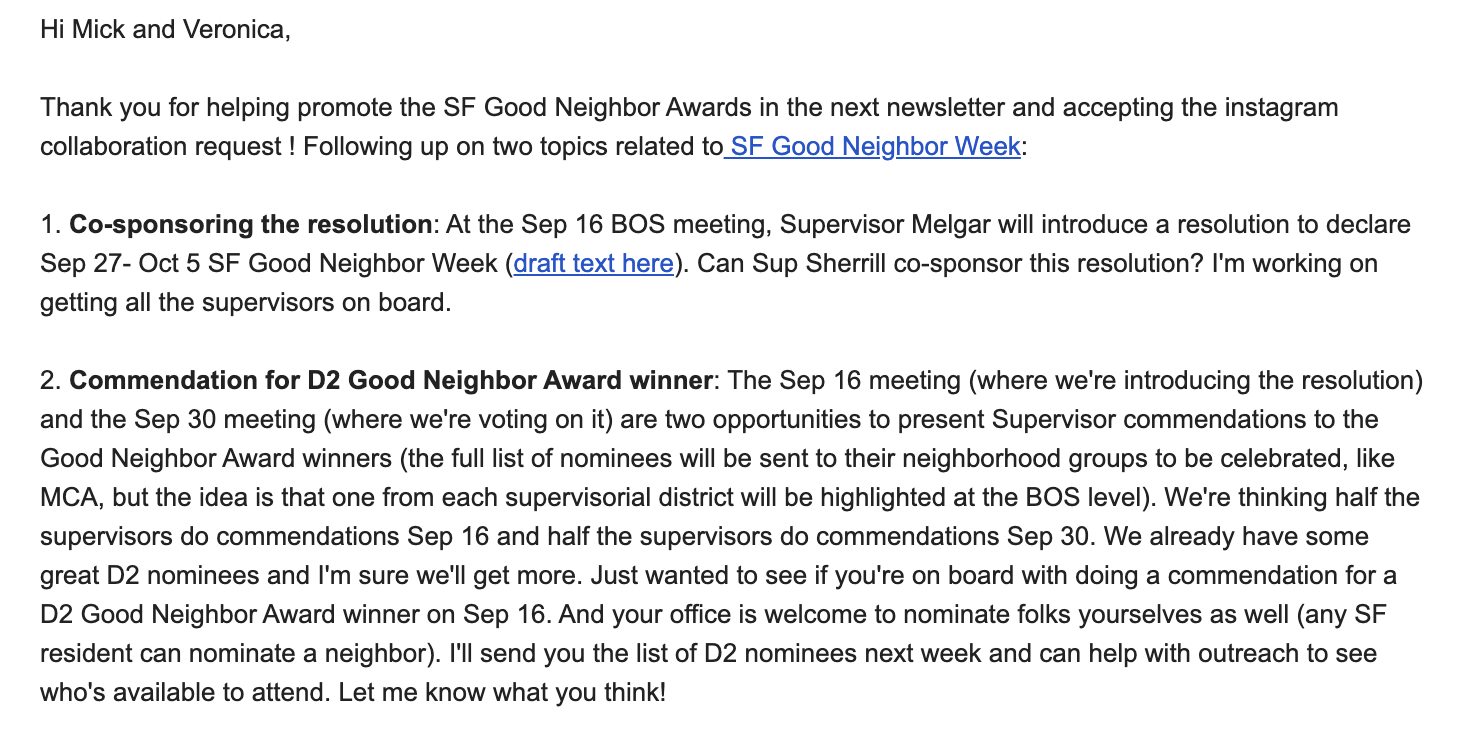
Email to Board of Supervisor's office (City Council) about co-sponsoring the resolution
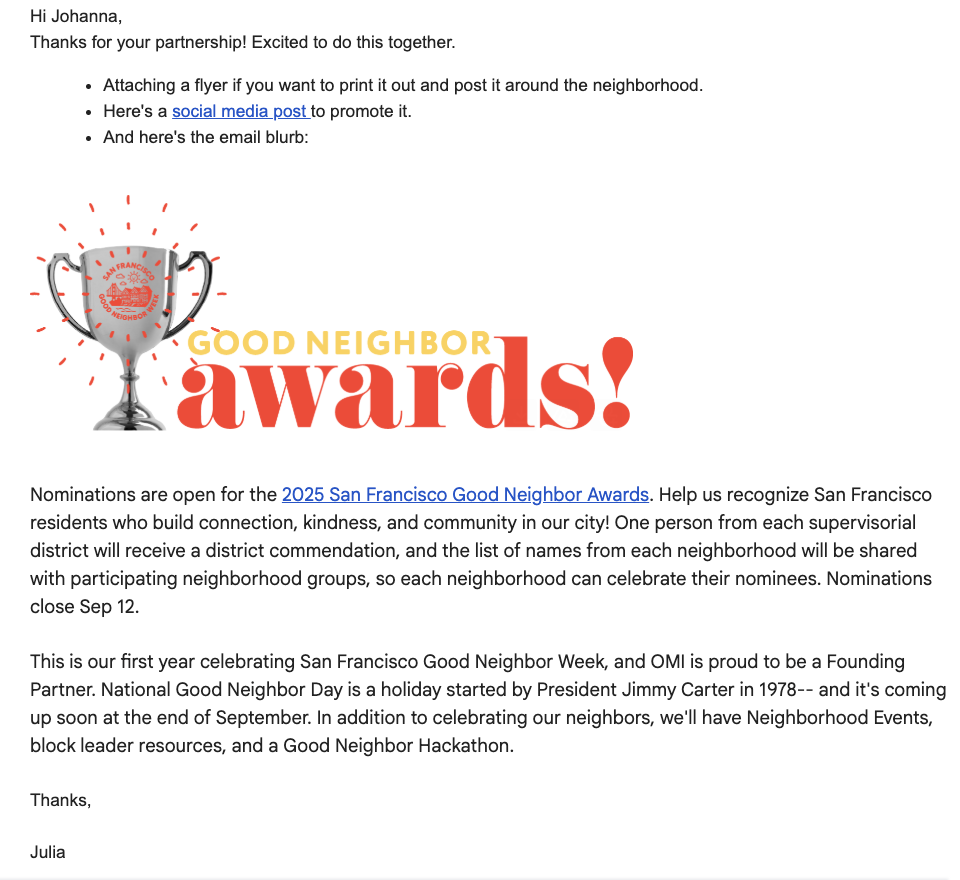
Email to neighborhood group leaders about promoting the nomination form
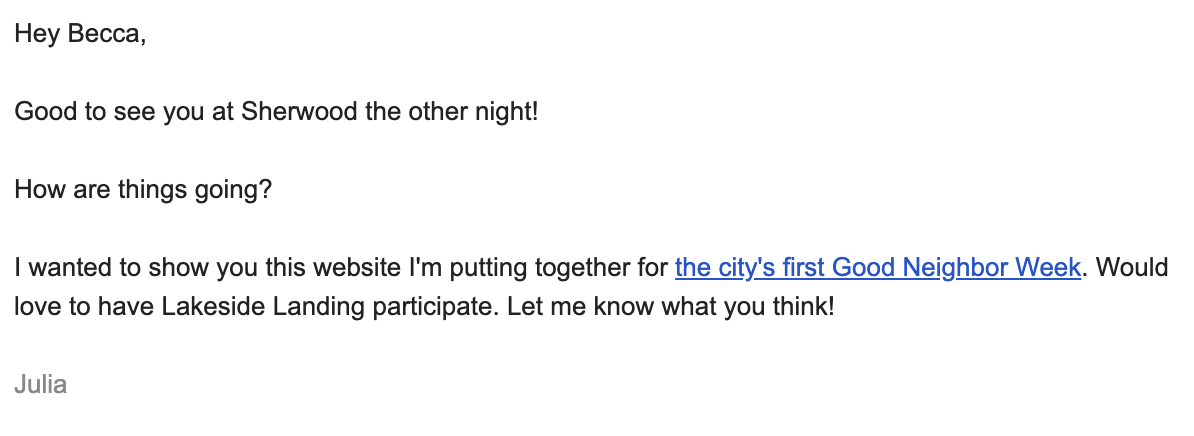
Email to neighborhood group leader about participating

Response from neighborhood group leader
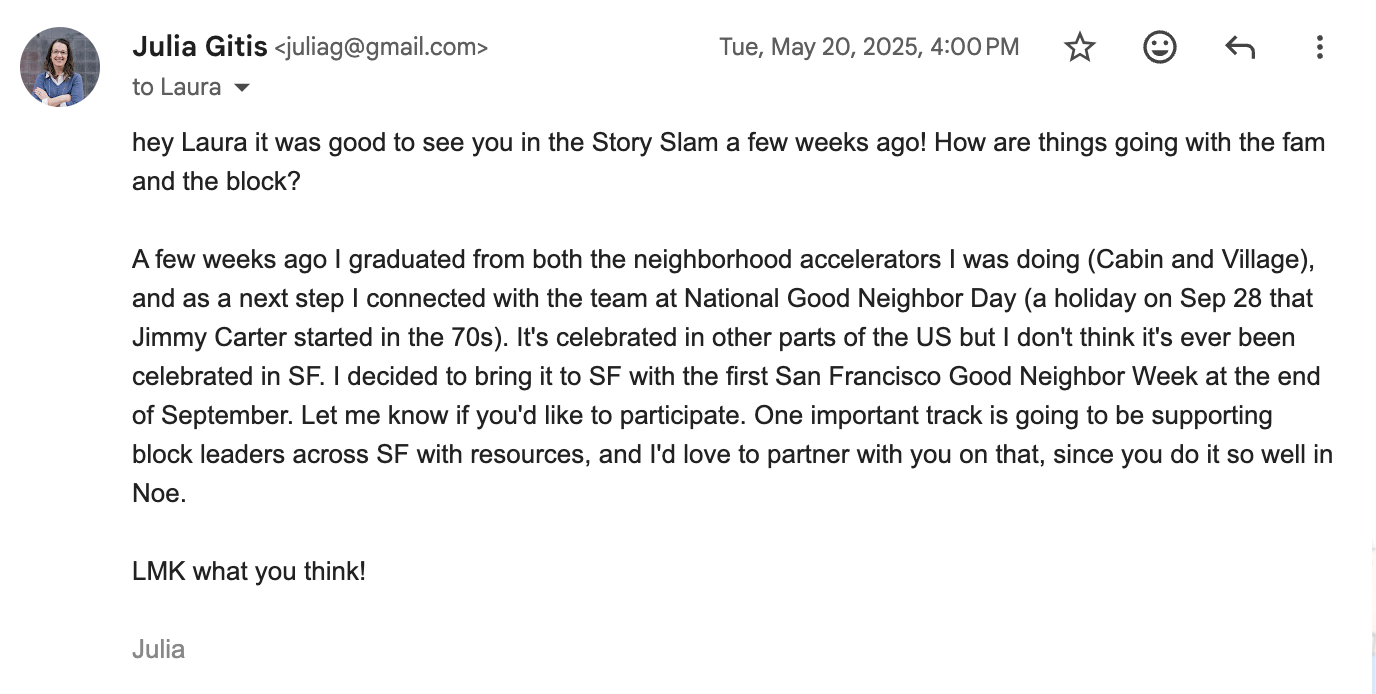
Email to block leader about helping develop block leader resources

Response from block leader
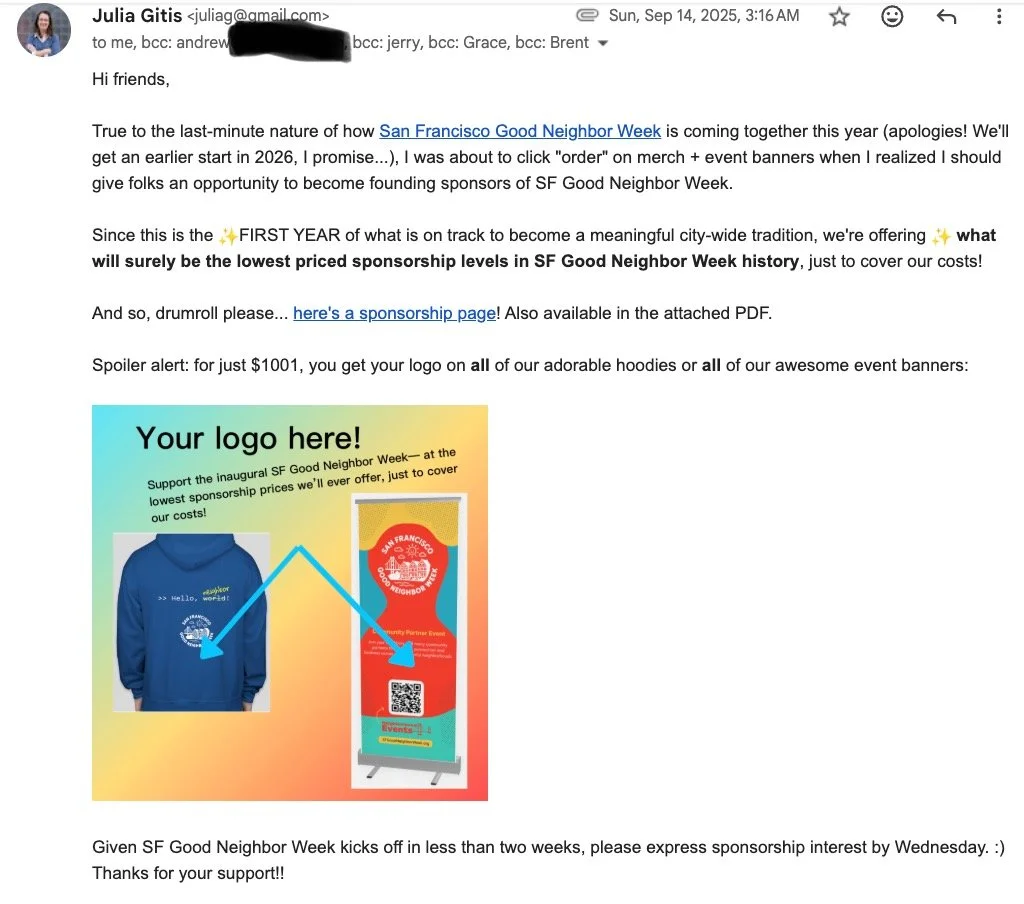
Email to potential sponsors
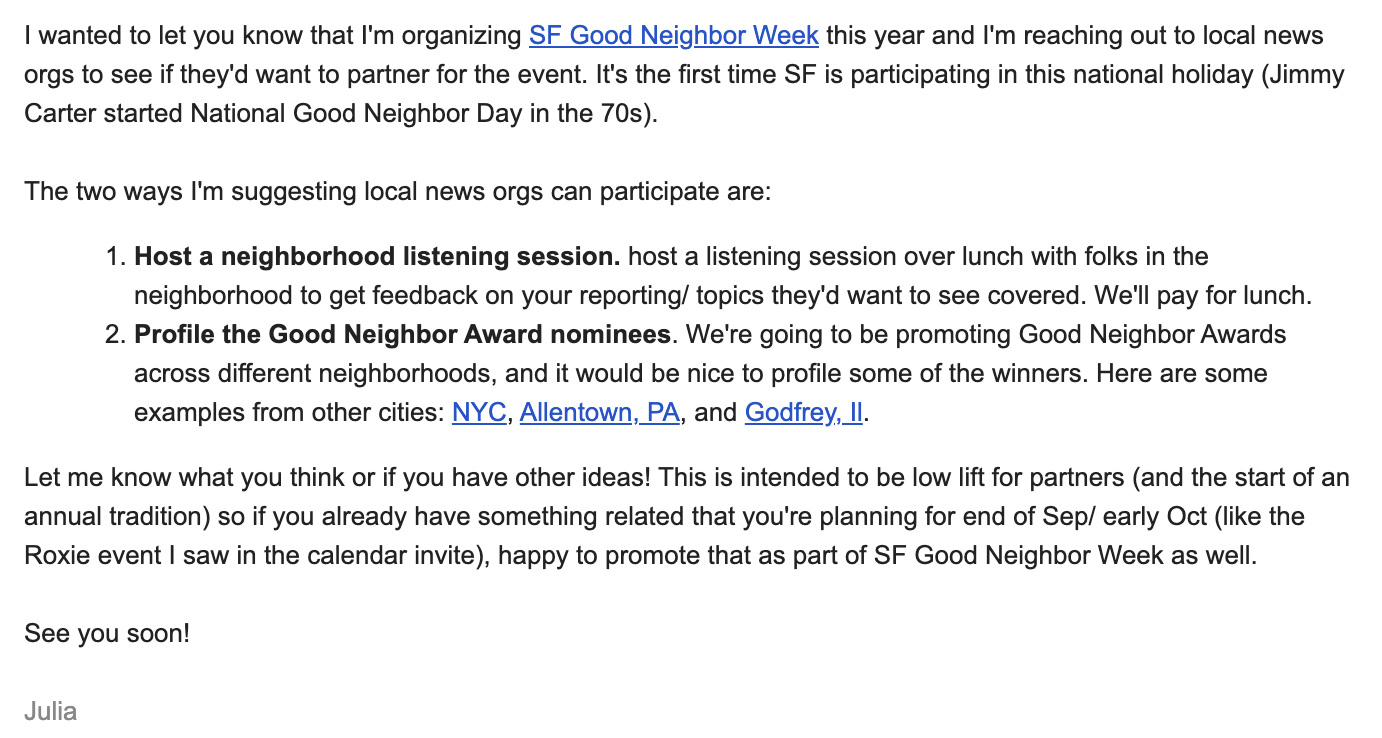
First email to local newsroom leaders
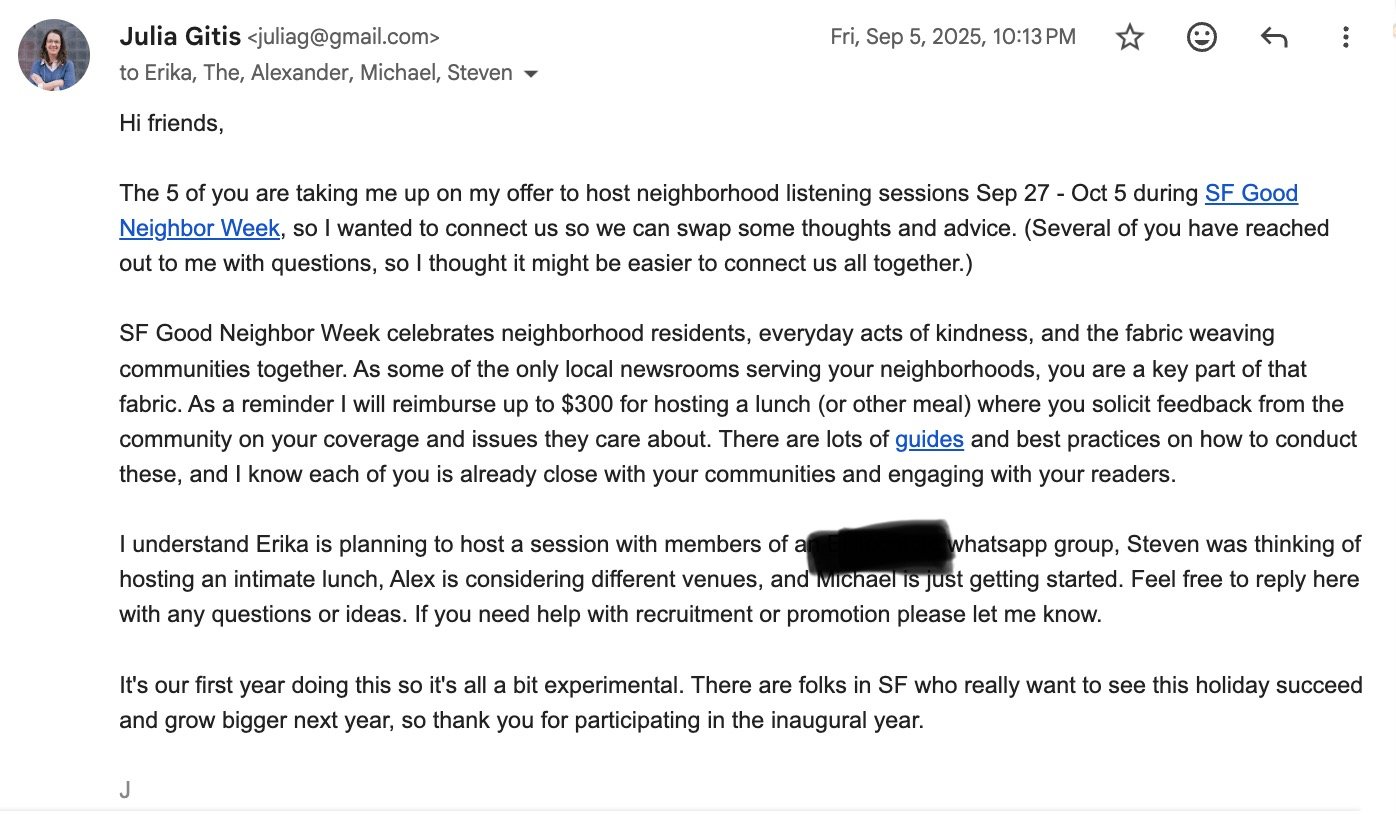
Follow-up email to local newsroom leaders
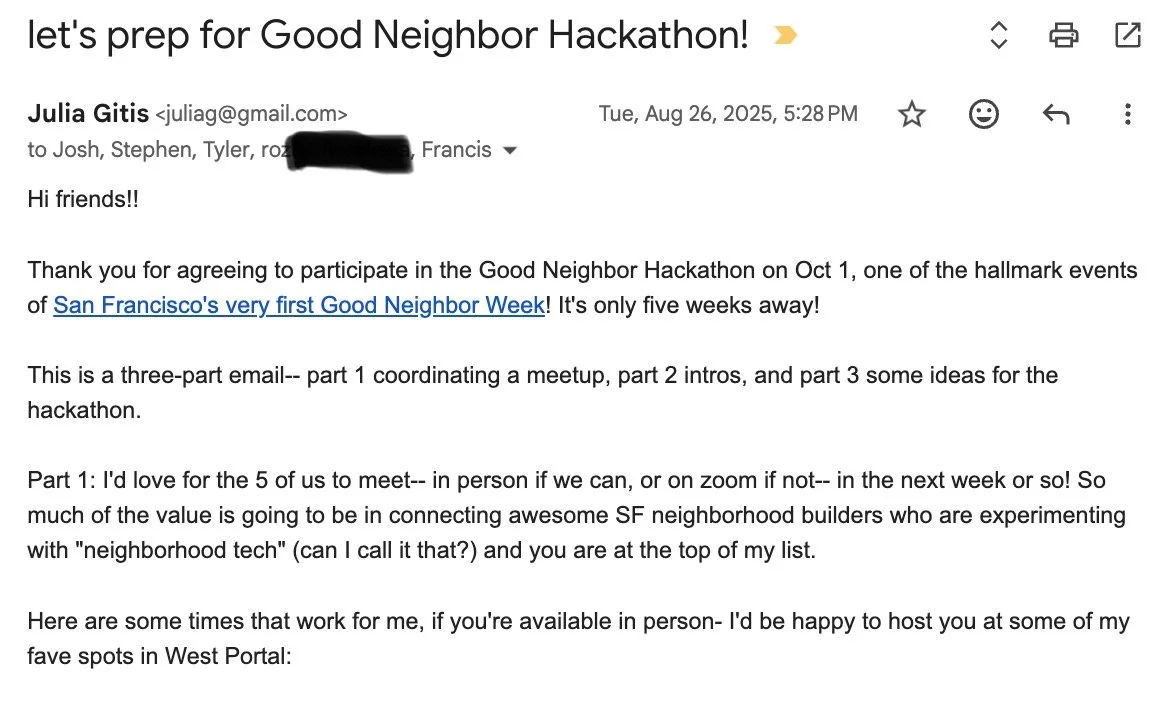
Email to Good Neighbor Hackathon presenters
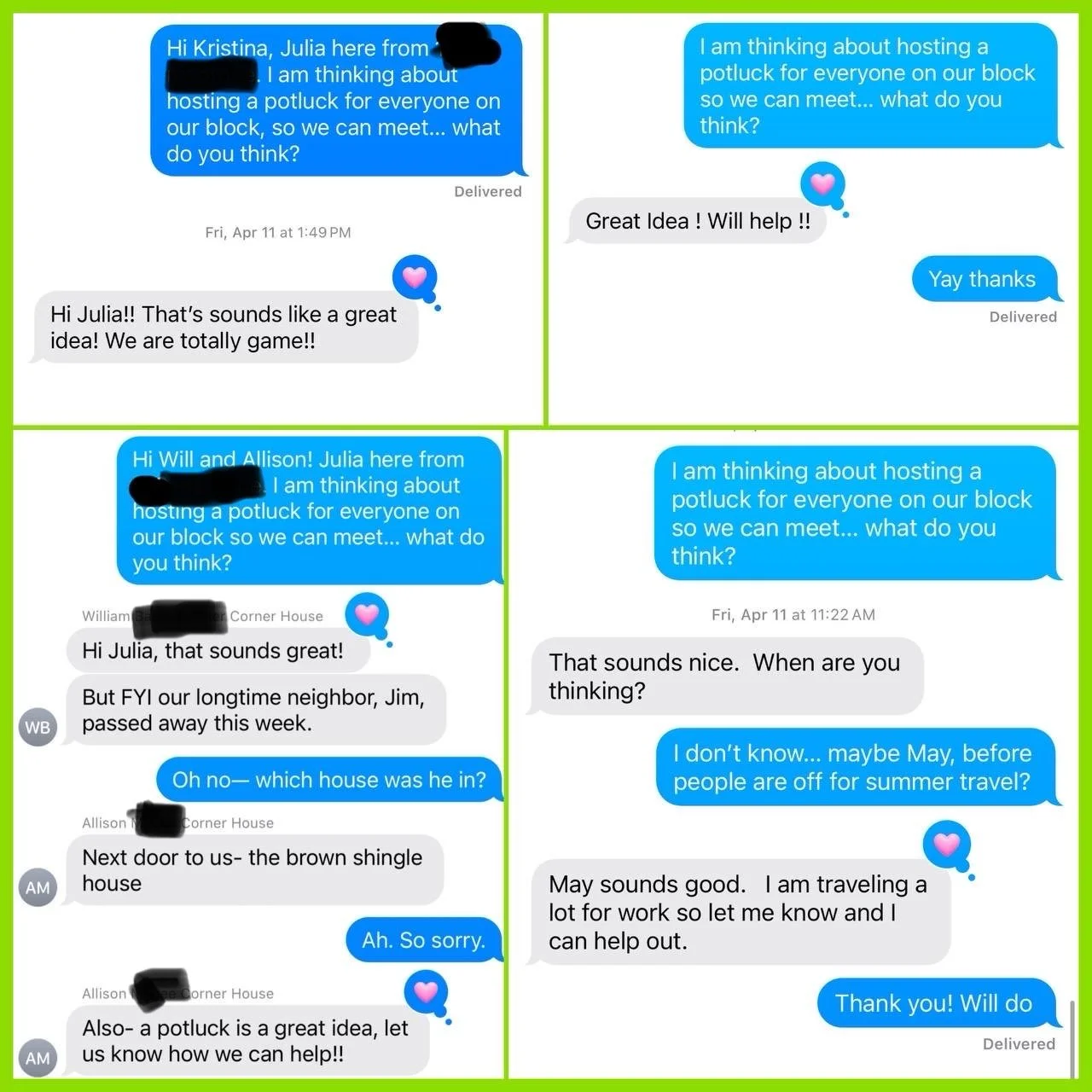
Texts with my neighbors